AN INDEPENDENT LOCAL COMMONSEL SEGUNDO / CALIFORNIA
ES↗el segundoA LOCAL GUIDE. AN OPEN UNIVERSITY.

POINTCAST FIELD NOTES / MADE AROUND HERE

Ideas with
a place in mind.

A town can be a studio, a classroom and a test of whether an idea helps anyone. These PointCast explorations make the learning concrete.

PLAY IT. FOLLOW THE SIGNAL.

Small instruments.
Shared possibilities.

Three ways into the PointCast drum world.

Play + shared signals

A beat from El Segundo

A small local instrument with an optional sound and an explicit tap that contributes one beat to PointCast’s shared counter.

Totals count beats, including automated contributions elsewhere; they are not people or visits. The full Nouns Drum Club musical room is separate.

Open the experience ↗

Play + creative tools

Nouns Drum Club

A playable Nouns instrument and shared musical room on PointCast. Open the club to explore its audio and room controls.

Audio and room participation use the club’s controls. Its musical notes are not the same thing as the separate shared beat counter.

Open the experience ↗

Shared data + attribution

Follow the shared signal

The public dashboard behind PointCast’s shared drum counter, including attributed sources and place tags.

Source and place summaries are ranked subsets; missing entries do not establish zero. Tags describe contributions, not verified locations.

Open the experience ↗

TWELVE DOORS INTO THE WORK

Explore. Borrow an idea.
Make it your own.

Making + local industry

What can we make around here?

A regional directory of 23 organizations, organized around machining, electronics, fabrication, automation and education. Each entry keeps its public evidence and uncertainty beside the capability.

What you can take from it: Learn how to turn a nearby company into a qualified research lead: define the process, distinguish a product vendor from a contract shop, then confirm capacity and requirements.

Research checked October 2. Approximate distances are not geocoded boundaries; listings do not establish availability, partnership or certifications.

Explore on PointCast ↗

Weather + quality of life

A year within reach

A 25-mile weather and living atlas connecting historical station records, rainfall and seasonal differences to everyday choices around the South Bay.

What you can take from it: Compare the coast and inland conditions, ask what the station actually represents, and plan seasonal habits while checking a current forecast separately.

Historical climate research, not a current forecast or neighborhood sensor network.

Explore on PointCast ↗

Shared things + design

Borrow an idea

Six imagined household objects explore focus, light, shade, weather and small daily rituals. A browser rehearsal lets you record a proposed use and what you would improve.

What you can take from it: Test the need with an object you already own before manufacturing another one. Record an observation, revise the idea and consider shared use.

Concept catalog and local browser demo. No physical stock, lending, reservation, payment or workshop operates here.

Explore on PointCast ↗

Daily rhythm + nature

The South Bay Almanac

A daily place-based register of sun, moon and tide, with human-readable cards and machine-readable companions.

What you can take from it: Separate calculated astronomical values from sourced tide observations, and make the timestamp part of the answer.

The retrieved page was a dated snapshot. Some listed places extend beyond 25 miles; filter places for the new oracle and do not reuse stale daily values.

Explore on PointCast ↗

Ocean + data literacy

Morning Waves

An ocean study built around the Santa Monica Bay offshore buoy, with significant wave height, period, direction and a schematic surface.

What you can take from it: Read a buoy report without confusing a drawing with a camera or offshore measurements with conditions at the beach.

No current reading verified in this audit. Offshore sea state is not a beach surf forecast or swimming-safety determination.

Explore on PointCast ↗

Coast + civic imagination

Nineteen ways to think about the coast

Beach Commons connects shelter, weather, useful objects, radio, ecology, public science and regional life across nineteen visual field studies.

What you can take from it: Follow one idea across scales: a shared seat, a temporary room, a field instrument, then the relationships that sustain a commons.

Independent speculative editorial series. No event, construction, coastal permit, restoration action or municipal affiliation is established.

Explore on PointCast ↗

Learning + local inquiry

University of El Segundo

An independent learning project that uses the town as material: place, business, care and making, with readings, practice and small artifacts.

What you can take from it: Choose a question close to home, keep observations separate from assumptions, and leave a useful artifact someone else can inspect.

Not an accredited university or City program. Proposed studies and participation paths must stay distinct from published learning material.

Explore on PointCast ↗

Local business + economics

Coffee, from counter to case study

A bounded café and roaster study combines dated menu and bean research with educational café, wholesale and subscription models.

What you can take from it: Learn what a menu can establish, what it cannot tell you about sales, and how to make business assumptions visible.

Selected sample rather than a census. No live inventory, actual shop revenue, current quote or acquisition opportunity is implied.

Explore on PointCast ↗

Signals + engineering

RADIUS / 90245

A shareable radio-link teaching instrument centered on El Segundo’s 25-mile field, with visible inputs, formulas and optional sound.

What you can take from it: Change distance, power and frequency, then see how a model responds. Keep the assumptions attached to the result.

Educational free-space model. It transmits nothing and is not a site survey, coverage promise or spectrum authorization.

Explore on PointCast ↗

Art + place

The El Segundo School

Michael Hoydich’s 652-work Midjourney field archive makes the university, coast, signs, gardens and shared systems into an ongoing visual language.

What you can take from it: Trace an image back to its saved file and prompt-derived record; use art to open an inquiry without treating a fictional poster as civic fact.

The archive manifest and three downloaded works were verified. Collector, mint and physical-production features were not transacted or independently tested in this audit.

Explore on PointCast ↗

Nouns Money + making

Small paper worlds

Nouns Money brings original-art notes, generated studies, printable files and playful tools into one collection, with a design workshop and learning companions.

What you can take from it: See how source artwork, a clear story, editable files and honest labels can turn a visual experiment into something others can learn from.

Collectible art with no cash value. Images and design identifiers do not establish ownership, redemption, legal tender, financial backing or manufactured editions.

Explore on PointCast ↗

Parks + civic systems

The survey before the park

A civic land-sharing exploration begins with sourced parcel memos and a show of interest before any specific site or steward is chosen.

What you can take from it: Notice the sequence: public evidence, one defined place, a responsible steward and a human decision before a physical commitment.

No parcel under contract, agreed steward or completed park verified. Pledges are non-binding intents; this audit did not submit, sign, pay or test transactional endpoints.

Explore on PointCast ↗
THE POINTCAST READING DESK / EVERYDAY DESIGN

Bring one
extra chair.

Twelve researched seats for the sidelines and the sea. Compare packed size, carry weight, sitting support and setup—then plan a gathering with room for one more.

Specification research, not hands-on testing. Original source check: September 15, 2026; recheck maker details, prices and availability.

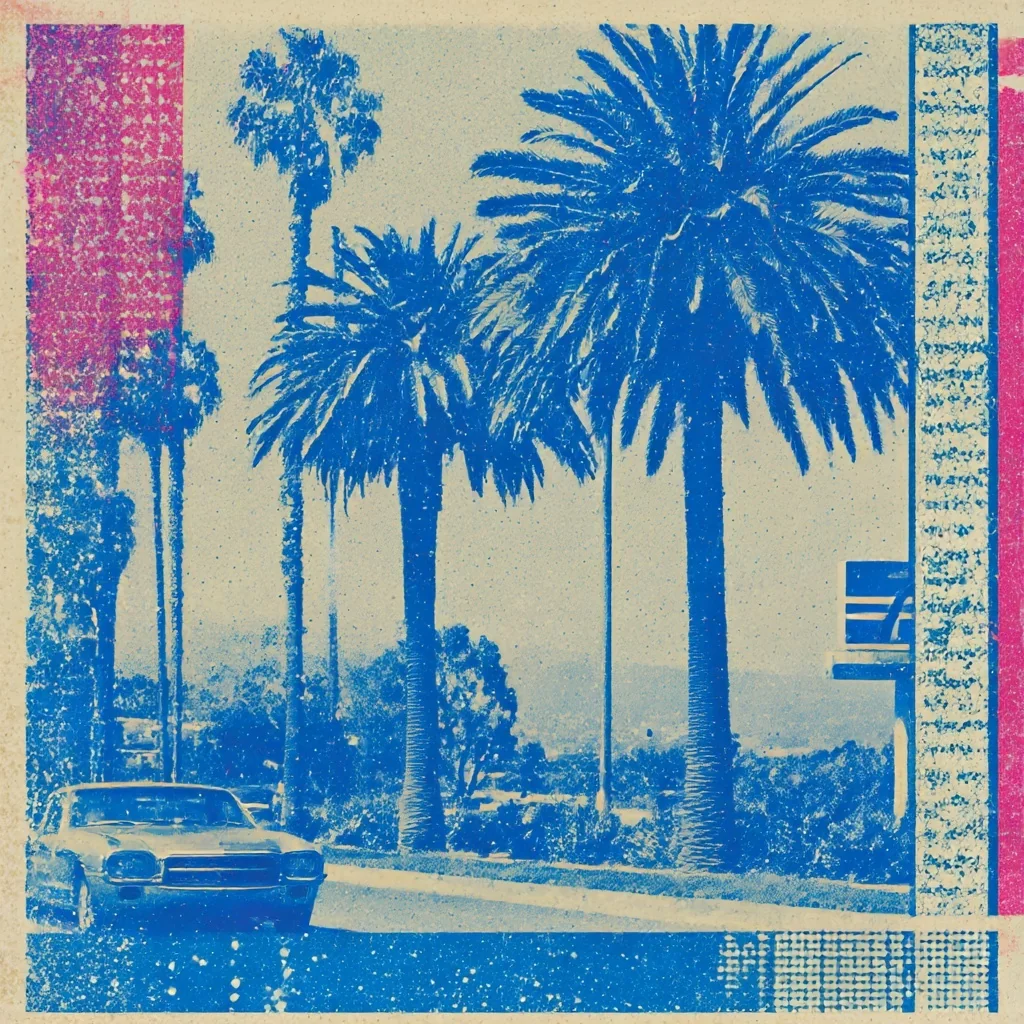
Imagined blue and magenta neighborhood street lined with palms, by Michael Hoydich.
Michael Hoydich · Midjourney artwork · an imagined neighborhood, not a product photograph

CASE STUDIES / NOUNS MONEY

What happens when
art becomes a system?

Three experiments in making, teaching and producing. The useful lesson is in the process: reproducible files, clear intent, visible sources and honest limits.

Nouns Money / design system

Make the art repeatable

The Nouns Money Workshop begins with a simple creative brief: choose a character, invent a place, and give a small paper object a reason to be kept. Its useful achievement is the path from a visual choice to an editable artifact. The recorded Nouns traits preserve the original pixel geometry and colors, while the surrounding composition gives the note its own setting and personality. A visitor can inspect both faces, save a design on the device, export SVG artwork, or keep a portable JSON recipe.

That recipe matters more than a decorative serial. Repeating the design repeats its fingerprint; the label is not a global registry, a scarcity mechanism or proof of ownership. The front and back can be printed as a small cut-and-pair proof, but commercial bleed, duplex registration and a manufactured edition still require separate work.

For a local club or small business, the transferable lesson is to build a modest creative system that another person can reproduce and revise. Keep the source record, make the purpose legible, and test a physical sample. The resulting object is collectible art with no cash value, redemption promise or official Nouns affiliation.

Nouns Money / UES learning

Turn an object into a lesson

The UES Currency Lab uses a decorative art note to teach four decisions: meaning, visual hierarchy, copies and testing. A learner first chooses why an object matters, then compares compositions and looks for the art label. The copy exercise is the turning point. Duplicating the note repeats its identifier, making it clear that a printed number can name a design without preventing another copy.

The final activity produces a project brief and asks for observations from a paper proof. Could another reader tell what the object was? Did the important label survive printing? Can the maker explain what the identifier does? A facilitator path turns those questions into a studio session, while a learner can work alone with a pencil and paper. Saving and exporting are deliberate; the exercise does not require a wallet or public identity.

This is a useful model for local AI learning: give people a small, inspectable artifact, expose one misconception through an experiment, and ask them to explain their judgment. A proposed six-note El Segundo exhibition remains an idea for a willing host, not a scheduled event. The lab produces an art specimen and learning record, not money, a redeemable voucher or a credential.

Nouns Money / Industry Next production

Bring the edition down to earth

Industry Next’s Nouns Money production desk asks what happens after an image exists. The study moves through materials, edition size, economics and release preparation. Paper, printing, finishing and packaging each carry an editable assumption. Setup, proofing and studio labor sit beside those unit costs, so a larger run cannot look attractive merely because one copy appears cheaper.

The model also separates printed copies from copies available to sell. Proofs and archive copies consume part of the run; assumed sell-through and a channel deduction then affect the modeled receipts. Its break-even calculation asks whether sales could recover the entire upfront edition cost. It does not present a printer quote, customer order or observed profit. The production checklist leads back to a real proof, confirmed specifications, a source record and a photographed object.

For local makers, this is the bridge between creative confidence and a bounded experiment. Import a design, state the assumptions, compare a small run with a larger one, then replace estimates with evidence before committing. The desk neither orders nor sells anything. These are collectible art editions, not circulating currency or financial instruments; a decorative engraving and a numbered run do not create backing, scarcity guarantees or returns.

Keep exploring.

The broader review covered the 330-entry published registry, 19 University studies and 19 Beach Commons editions. These are more paths into the local work.

33 more thematic explorations

  • Hoydich Play / SIGNALSAURS — A robot-dinosaur toy concept with a brand book, mood boards, advertisements, manufacturing research and an editable launch model. No working toy or app yet.
  • Coffee — Local coffee places, brew-cost tools and a proposal-only group-buy worksheet.
  • Bread — Local bread places, loaf-cost tools and a proposal-only group-buy worksheet.
  • Coffee room — The legacy coffee collectible room with its existing editions and pour display.
  • The state of electricity — A sourced electricity study with California and El Segundo context, plus illustrative appliance-cost and solar/storage scenarios.
  • Low-minimum manufacturing — Sourced manufacturing options and prototype planning with limits and Currency companion links.
  • China — Five regional lenses on China’s design, manufacturing and daily life.
  • America — A regional reading tour of American manufacturing and learning.
  • Coastal Signal — Seeded coastal SVG art with motion controls and local HTML, SVG and provenance downloads. Wallet-free, unminted prototype.
  • Coastal Signal · MetaMask study — Original generative coastal art with guest seeds and an optional local wallet-derived seed.
  • Sun — Daylight and space-weather reports with a solar-energy teaching lab.
  • Air — KLAX weather and atmosphere learning; AQI is explicitly unavailable.
  • Groundwork: real estate observatory — Study a 25-mile local radius and global real estate foundations; edit assumptions in a hypothetical five-year acquisition lab.
  • The Band — A shortwave dial everyone shares. Park next to someone and your carriers hum. A fox keys a greeting somewhere on the band every day: alone you barely copy it, together the static clears, and everyone near gets a QSL card.
  • FILA / El Segundo — Nine original coastal garment concepts with image views and a local saved selection.
  • Saturday meditation — Optional breath and listening timer for the dated El Segundo study.
  • El Segundo Buildworks — Six El Segundo-inspired small-goods concepts, process comparisons, a maker brief and illustrative pilot economics. Concepts only; no orders or inventory.
  • Coast, Reimagined — Fifty historical source artworks paired with fifty individual OpenAI reinterpretations, with search, filters, viewing rooms and public provenance. Display only.
  • Pickleball home — Practice readings, a browser-local scorecard, and a proposed paddle comparison with tab-local counts; no verified rating or booking.
  • The Extra Chair — Twelve researched seats and three ways to gather. From telescoping pickleball stools to a spare chair by the sea.
  • PointCast Tonight — A human-sized entertainment guide around El Segundo: one week of official-source outings, municipal television signals, visible canceled slots, and a crawler that stages rather than auto-publishes.
  • Sunset Switchboard — A mobile-first El Segundo signal instrument: tune the sky, band, and reach, then share the broadcast or save it as a card.
  • Saturday Myth Machine — An unofficial college-football mascot atlas and deterministic card battler where local resources, tradition, current PointCast form, conference chemistry, creature instinct, and arena weather all become playable.
  • Coach Weather — A recurring college-football pressure desk with an honest preseason baseline, twelve named rooms, local watchlists, and a 100-point Build Your Program matcher across the PointCast 50.
  • PointCast Chartmaker — A chart lab for combining PointCast-native data with weather, market, sports, feed, and browser-local sources.
  • The Cabinet — A personal PointCast shelf that gathers local cats, ocean cards, mint receipts, and passport stamps.
  • The Observatory — A night-sky view of PointCast collectibles that turns local receipts, cats, ocean cards, and stamps into a constellation.
  • Gallery Wall — A curator room for arranging cats, ocean cards, routes, and receipts into small collectible exhibitions saved locally.
  • Lucky Cat — Catch glowing sparks, find a little focus, and choose your next original 3D companion. Sixty cats, with masterworks earned through small wins.
  • Look outside — A small El Segundo window that follows the real time of day and the weather outside. Sun, moon, fog, stars.
  • Ocean meditation — An ocean room with Calm Bay, Deep Current and Moon Tide programs, timed breathing and a tide log.
  • Mike Hoydich Radio — One listener’s radio station from El Segundo: what is on air now, what has been playing and when, the station clock, heavy rotation, deep cuts, and a wall of sleeves.
  • PointCast Teletext — A numbered directory into published weather, ocean, jobs and other destinations; no live observations are simulated.

Catalog review is broader than individual route testing. Some briefs rely on publication records; prototypes, research archives and live services are distinguished in their notes. Read the project register and coverage notes.